Metal Braces vs. Clear Ceramic Braces: Which Is Right for You?

June 15, 2026

Metal braces used to be the only option.


Then, in the 1980s, NASA and a company called Ceradyne (a defense and aerospace materials company) joined together to develop a ceramic material called translucent polycrystalline alumina, or TPA. This material was engineered to protect infrared sensors on heat-seeking missile trackers and was stronger than steel, and nearly transparent.

You’re probably wondering, what does any of this have to do with orthodontics?


Well, in 1986, a company called Unitek approached Ceradyne in search of a transparent material that was strong enough to be used for orthodontic brackets. Ceradyne had just the material, introducing them to TPA. The two companies partnered together, ran clinical trials, and launched the first clear ceramic braces in 1987.

So in a way, you can thank NASA for being able to have the choice of clear braces vs metal braces! 


The Different Types of Braces

If someone says the word braces, an image of metal braces is probably the first thing that pops into your head. But the reality is that through modern orthodontics, several types of braces have come to be, designed to fit different lifestyles, budgets, and treatment needs. Of these dental braces types, there are two that many people find themselves deciding between.


Traditional Metal Braces:
Known for their strength, precision, and affordability.


Clear Ceramic Braces:
Offering a discreet, tooth-colored alternative to metal braces. 


Both options use the same fundamental mechanics, where brackets are bonded to each tooth and an archwire connects them all. This bracket and wire system allows gentle pressure to be applied to your teeth, guiding them into alignment.

The fundamental differences, when you’re doing a side-by-side comparison of ceramic braces vs metal braces, are found in the materials used, the aesthetic appeals, and slight differences in clinical use cases. 


By understanding these differences, you can feel confident that you’re choosing the right option for your smile transformation. 


What Are Traditional Metal Braces?

Traditional metal braces are made from high-grade stainless steel. They’re incredibly strong, highly precise, and capable of correcting a wide range of orthodontic issues from mild crowding or spacing problems to more complex cases involving bite misalignments. 


Over the years, metal braces have undergone many innovative changes and are much improved from what they once were. They are significantly smaller, more comfortable, and more precise. 


And while metal braces aren’t discreet, many patients actually like the look of them, and enjoy the customization that’s possible with different braces band colors. 


How Metal Braces Work

Each stainless steel bracket is bonded to the front surface of the tooth using a special dental adhesive. A thin metal archwire is then threaded through all of the brackets and held in place by small elastic bands (these bands are what give metal braces their “color”). Every 4 to 10 weeks your orthodontist swaps out the elastic bands, adjusts the tension of the archwire, and makes sure that your teeth are moving in the right direction. These adjustment appointments are critical to your treatment, because they ensure that the correct tension and force are being applied to each individual tooth, and that this pressure is leading to the desired tooth movement. 


Pros of Metal Braces:

  • Most durable option available. They are stain proof and highly resistant to breaking. 
  • Effective for complex cases. Offering precise control, metal braces are great for more significant tooth misalignments or bite corrections. 
  • Generally the most affordable orthodontic treatment option when it comes to fixed appliances. 
  • Suitable for all ages. Whether you’re an adult, a teen, or a child, metal braces can be a great way to fix your smile. 
  • Color band customization at every appointment. This is especially a big pro with children and teens. 


Cons of Metal Braces:

  • Most visible orthodontic appliance. The silver brackets do create a stark contrast against the teeth. There’s really no hiding them. 
  • Initial discomfort as your lips and cheeks adjust to the roughness of the brackets. This discomfort will typically resolve within 1 to 2 weeks and can be assisted with things like orthodontic wax. 
  • Food restrictions do apply, as you’ll need to avoid hard, sticky, or chewy foods that could damage your brackets or bend wires. 


Who Are Metal Braces Best For?

Metal braces often make the most sense for patients with moderate to severe tooth misalignment, significant bite correction needs, or other complexities that require the highest level of precision and control to get the best results.

They also make sense for teens who are active in sports, patients who are working within a tighter budget, or anyone who simply likes the look. 


When it comes to evaluating the best braces for adults with complex cases, metal often comes out on top for precision and cost. 


What Are Clear Ceramic Braces?

Ceramic braces, also referred to as clear ceramic braces, or just clear braces, work the same as metal braces from a mechanical perspective. They utilize the same bracket and wire system, and follow the same adjustment schedule of 4 to 10 weeks, with a similar timeline to end of treatment.

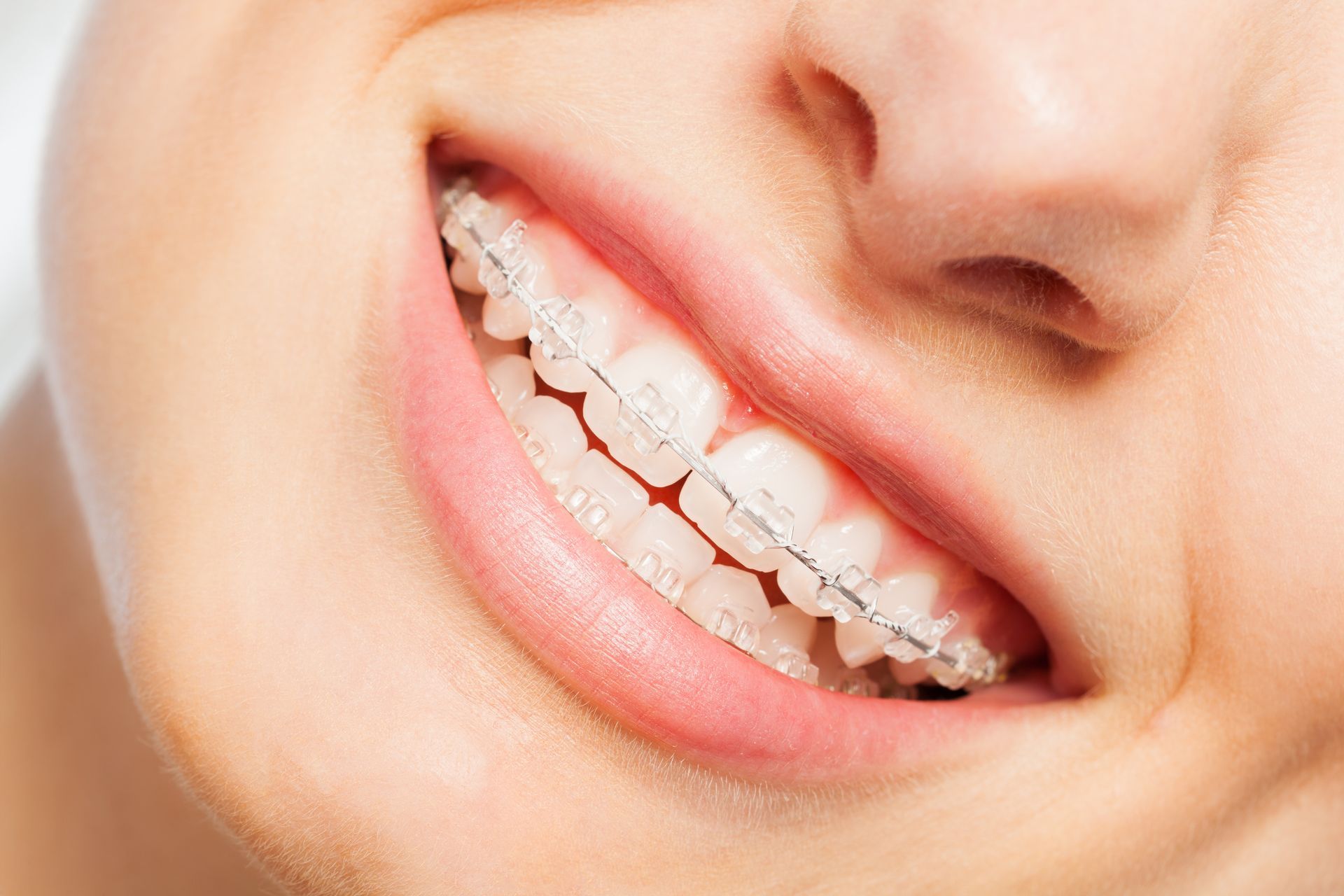
The key difference is the material used. For clear braces, the brackets are made from a polycrystalline or monocrystalline alumina composite AKA a ceramic that’s either tooth colored or translucent. This allows them to blend in with the natural coloring of your teeth, making them less noticeable. 


Ceramic braces aren’t completely invisible, but for patients who want a more discreet treatment option without going the route of clear aligners, they strike a great balance of function and aesthetics. 


How Ceramic Braces Work

The mechanics of clear braces are identical to metal ones. The brackets are bonded to each tooth with dental adhesive and an archwire runs through each bracket, held in place by small elastic ligatures. In line with the more discreet look, the archwire of ceramic braces is often white or silver coated in order to reduce visibility.

A tradeoff with ceramic braces is that while the brackets are still very strong, they are less resistant to damage and require a bit more care. However, with consistent hygiene and mindful eating habits, most patients complete treatment without any bracket issues. 


Pros of Clear Ceramic Braces:

  • Significantly less visible than metal braces, as the brackets and archwire are designed to blend in with your natural tooth color. 
  • Effective for mild to severe cases, with outcomes for most patients being comparable to metal braces. 
  • Confidence boost for teens or adults who are image-conscious. 


Cons of Clear Ceramic Braces:

  • More expensive than metal braces, with the difference in price typically being $500 - $1,500 more. 
  • Ceramic brackets can be more susceptible to damage than metal. Despite being incredibly strong, ceramic brackets can chip under impact which can make metal a better choice for teens who are active in contact sports. 
  • Elastic ligatures are more susceptible to staining, since they’re often white or clear as a way of maintaining a discreet look. Coffee, tea, red wine, and tomato sauce are some of the most problematic, which is why good hygiene is important. Otherwise, the staining of the elastic can make your teeth appear yellowed. Pearl-colored elastic ties are often the best at resisting stain while blending in nicely with the teeth and brackets.
  • Food restrictions apply the same as metal braces. It’s important to avoid hard, sticky, and chewy foods that can damage your brackets or bend wires. 


Who Are Ceramic Braces Best For?

Ceramic braces for adults are incredibly popular because they provide the functionality of braces, while being more discreet than the metal alternative. Clear braces are a great option for adults who are in a professional setting or a client-facing role, or for older teens who are approaching graduation, prom, or college interviews.

If your budget allows for the upgrade, and a fixed appliance makes sense over aligners, then the decision of metal braces vs clear really comes down to just one question: how much does the visibility of your brackets matter to you during treatment?


Metal Braces vs Ceramic Braces: The Side-by-Side Breakdown

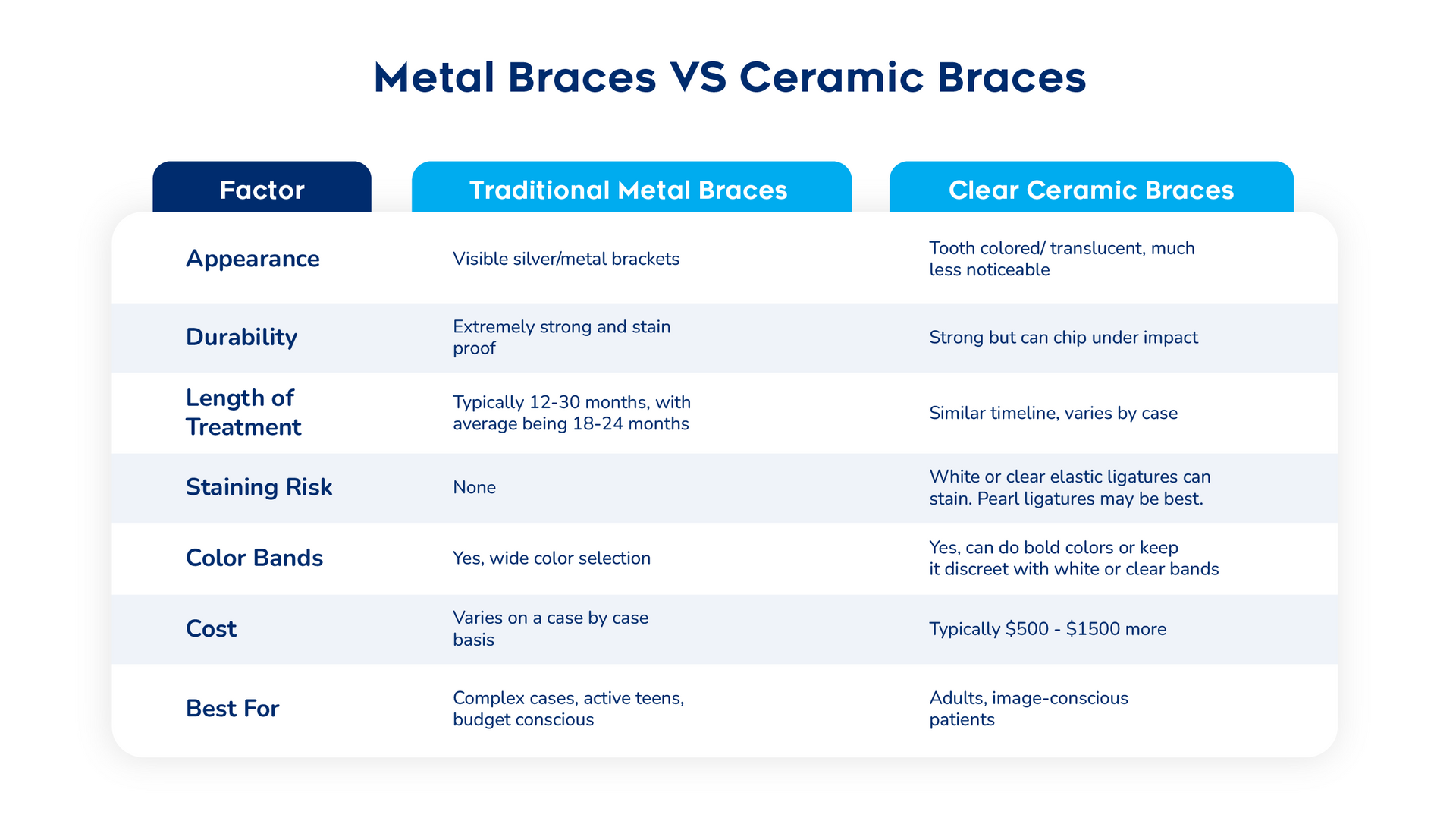
To make it super easy and digestible, here’s a table breaking down metal braces vs ceramic braces based on the factors that patients care most about.


When comparing metal vs ceramic braces, it can be helpful to use a chart like this to weigh the general pros and cons. However, the decision will ultimately come down to your individual case and this where an orthodontist is an invaluable resource.

During your initial orthodontic consultation, your orthodontist will evaluate your teeth, jaws, and bite, giving you a complete picture of what’s going on. They’ll then be able to make a personalized recommendation based on your lifestyle and needs.


How Much Do Ceramic Braces Cost vs. Metal?


Ceramic braces cost more than metal braces, with the exact difference varying based on factors like case complexity and treatment length. The reason for this cost difference comes down to the materials. Simply put, the specialized ceramic composites used in clear ceramic braces cost more to produce than stainless steel. 


The good news is that for most patients, the gap between clear braces cost vs metal is manageable, especially when you work with a practice like Cardall Orthodontics where we provide you with flexible financing options to fit your budget. We truly believe that everyone deserves a smile they love, and we’ll do what we can to help get you there.


Which Braces Are Best for Teens?


As you can guess, children and teenagers make up the majority of orthodontic patients, which leads to a popular question of what are the best braces for teens?

It ultimately comes down to the individual, but let’s break down how you might start to think about it:


The Case for Metal Braces for Teens

Metal braces are the most common recommendation for teens. Part of that is because they’re the most durable. Let’s be honest, not every teenager is going to be the best at being mindful about what they eat and maintaining an extremely high level of oral hygiene. With metal braces, there’s simply less care and maintenance required, which can be a big pro for teens.

Additionally, for teens involved in contact sports, metal is generally the safer choice. Ceramic brackets are incredibly strong, but are more susceptible to chipping or breaking upon impact than stainless steel. A broken ceramic bracket can mean an emergency visit to the orthodontist and can lead to potential delays in treatment.

As a side note, it's important to mention that regardless of the type of braces your teen has, a properly fitted mouthguard that’s compatible with their braces is essential during any contact sport.

The Case for Ceramic Braces for Teens
Ceramic braces for teens make the most sense for older high schoolers who are doing college interviews or are approaching milestones like prom or graduation. They also make sense for teens who are especially self-conscious about the appearance of metal brackets. If your teen falls into one of these categories, then clear braces for teens could make a meaningful difference in their confidence and comfort during treatment. 


Which Braces Are Best for Adults?

Adult orthodontic patients are a rapidly growing group in orthodontics. And the decision of clear braces vs metal in many cases comes down to appearance.

Most adults pursuing orthodontic care are doing so while also operating in a professional context with a combination of meetings, client interactions, presentations, social events, etc. taking place daily. For many people, they don’t want clearly visible metal brackets being a part of their image for 18-24 months.

Ceramic braces for adults address this concern, as the tooth colored or translucent brackets blend in and are much less obvious. Many patients feel like clear braces look more appropriate in an adult context. 


That said, metal braces could be needed for adults with more complex cases, and there are plenty of people who aren’t bothered by the aesthetic of metal. In fact, some prefer the aesthetic of metal braces for adults.

When it comes down to it, the best orthodontic treatment options are always the ones that fit both your specific clinical needs and your lifestyle.


Can You Get Color Bands with Ceramic Braces?


When most people picture clear braces, they imagine a neutral look where everything is either translucent or tooth colored.

However, ceramic braces with color bands is absolutely an option! 


The brackets of ceramic clear braces are tooth colored, but the elastic bands that hold the archwire in place can be whatever color you want, just like with metal braces.

Sure you can keep things neutral with white or clear elastic ligatures, but you can also feel free to go bold with bright colors.

And the fun part? You can switch up the colors at each appointment. So, every 4 to 10 weeks you have the option to personalize your look.


Care & Maintenance: What to Expect with Each Option

When it comes to taking care of metal braces vs ceramic braces, both require consistent oral hygiene throughout treatment. However, ceramic braces benefit from a slightly more attentive approach due to their potential to stain.

General Care Tips for Both Metal and Ceramic Braces:

  • Brush thoroughly after every meal, and at the very minimum every morning and night. 
  • Use a soft-bristled toothbrush, ideally with a smaller head that allows you to navigate around tighter spaces. You can also get an orthodontic brush that allows you to get to hard to reach places. Electric toothbrushes have been proven to consistently remove more plaque than manual toothbrushes, so using an electric toothbrush is preferred.
  • Use a fluoride toothpaste. 
  • Pay close attention to cleaning around every individual bracket. If not properly cleaned, plaque buildup in these areas can cause demineralization of the enamel, which may result in permanent white spots after the braces are removed.
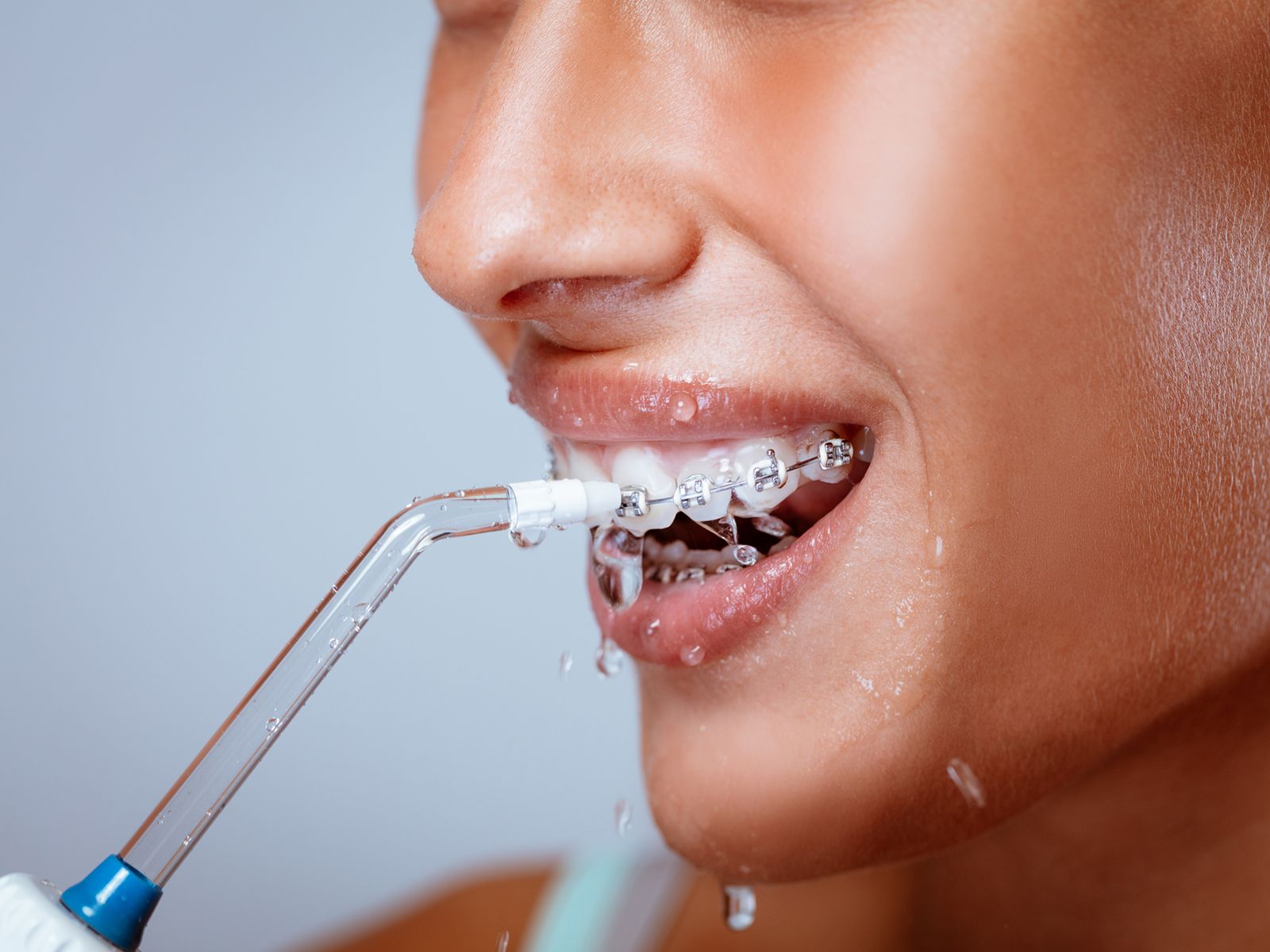
  • Floss daily with a floss threader, orthodontic flosser, or water flosser. 
  • If you’re experiencing discomfort from brackets rubbing on the soft tissues of your lips or cheeks, use orthodontic wax to provide a more forgiving barrier. 
  • Avoid hard, sticky, chewy, and crunchy foods that risk damaging brackets or bending wires. 
  • When playing contact sports wear a properly fitted mouthguard.
  • Attend all of your scheduled adjustment appointments (they’ll typically take place every 4 to 10 weeks).


Additional Care Tips Specific to Ceramic Braces:

  • Limit coffee, tea, red wine, tomato-based sauces, along with other dark pigmented foods/ drinks that have a high potential of staining your white or clear ligatures. This staining can make it so your braces take on a yellowed appearance. 
  • Rinse with water, or better yet, brush your teeth promptly after consuming staining foods or beverages. 
  • Be aware that ceramic brackets are less resistant to impact forces than metal brackets. Be especially careful when eating certain foods and avoid biting directly into hard foods like apples, crusty bread, or carrots with your front teeth. Instead, cut them into smaller pieces. 


So, Clear Braces vs Metal, Which Should You Choose?


When it comes to clear braces vs metal there’s no universal right answer. For example, the best braces for adults who are client facing every day could be completely different from the best braces for teens who are involved in contact sports.

What matters is figuring out which braces are the best fit for
you based on the complexity of your case, your lifestyle, and your budget.

At Cardall Orthodontics, we’ll help you determine which path makes the most sense. We’ll evaluate your teeth, jaws, and bite, talk with you about your goals and lifestyle, and walk you through your options so you can go into orthodontic treatment feeling ready and confident.

So, whether you found this article by searching for ceramic braces near me or still have yet to make a decision between metal vs ceramic braces, set up a complimentary consultation today, and we’ll help you get started on getting your smile on the right track.

Because after all, everyone deserves a smile they love.

Contact Us

Share this article

Recent Posts

child with crooked teeth
May 20, 2026
Wondering if you need braces? Learn about the most common signs from crooked teeth and gap teeth to jaw pain, bite issues, and uneven tooth wear. Plus what to do next!
May 4, 2026
The power of choice. You get to choose the clothes you wear. You get to choose what you eat. You get to choose who you’re friends with. You get to choose what your hobbies are. The world is filled with choices and when it comes to colors for braces, it’s no different! The braces color wheel is made up of all of the colors of the rainbow, and more. So then the question becomes, what are the best colors for braces? Well, in some ways, that’s up to you and your personal preference, but there are certainly plenty of factors that can help inform your decision. So without further ado, here’s what patients most commonly want to know most.
April 24, 2026
You look in the mirror and a big smile spreads across your face. Why? Because today marks the day that you’re done with your orthodontic treatment. So naturally, you’re probably wondering: what are the next steps? How do I keep my smile looking this good, 10, 20, 50 years down the road. Well, one of the single most important things you can do to protect your result is wear your retainer. Now a common follow up question to this is: how long will I have to wear a retainer? Is it temporary or do I have to wear my retainer forever? The truth is that even after treatment, your teeth will want to shift. These forces are natural. The best way to prevent that movement from happening is a retainer. In this blog, we’ll make sure we answer all of the questions you might have from how long do you have to wear a retainer to how long do retainers last to how often do you have to wear your retainer. So let’s get started!
April 7, 2026
Discover what a palatal expander is and how it plays a crucial role in orthodontics for creating more space for teeth. Learn more today!
March 13, 2026
Discover how to correct gummy smiles with orthodontics in our ultimate guide. Explore treatment options and find the best orthodontist for your needs!