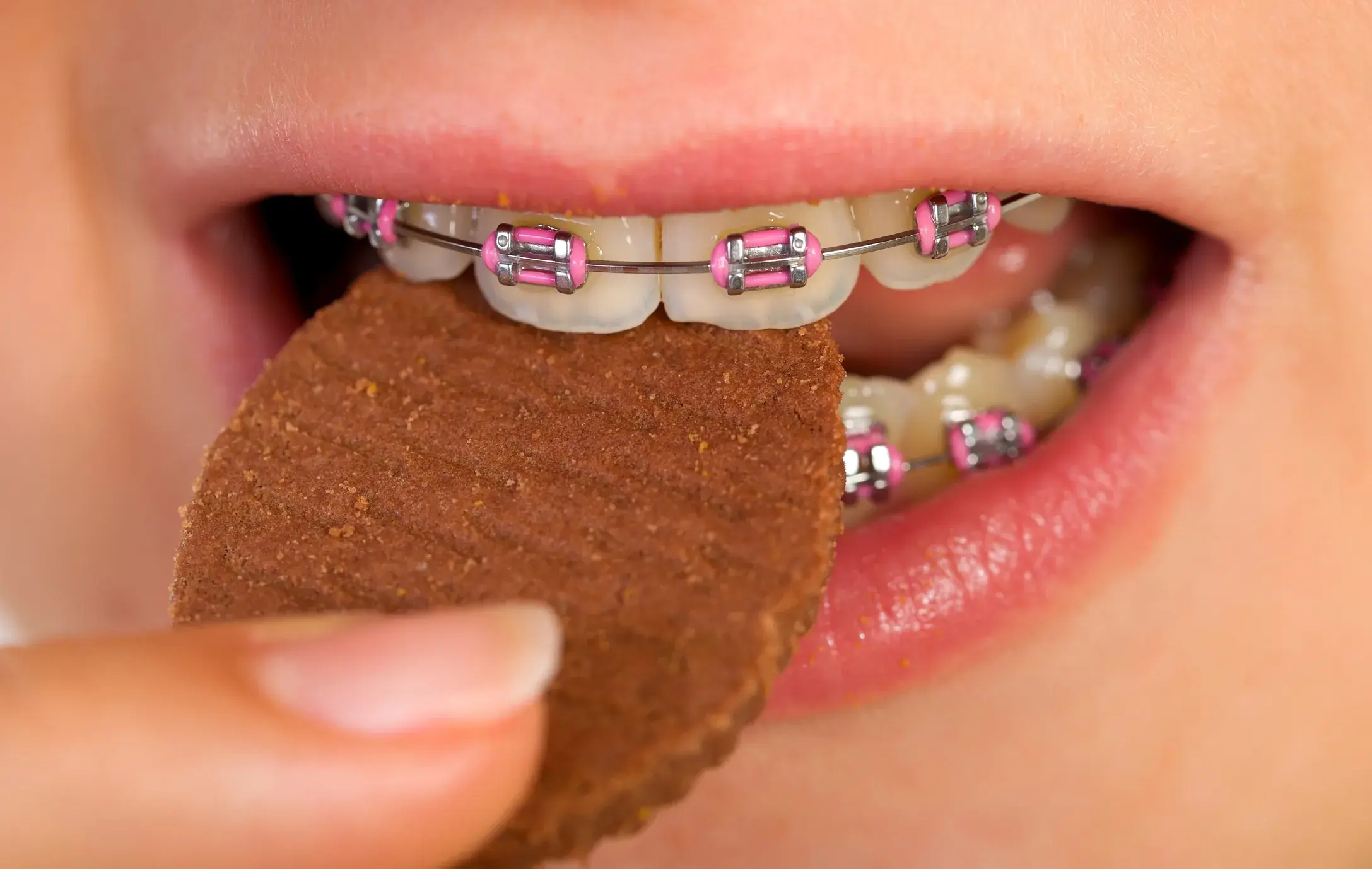
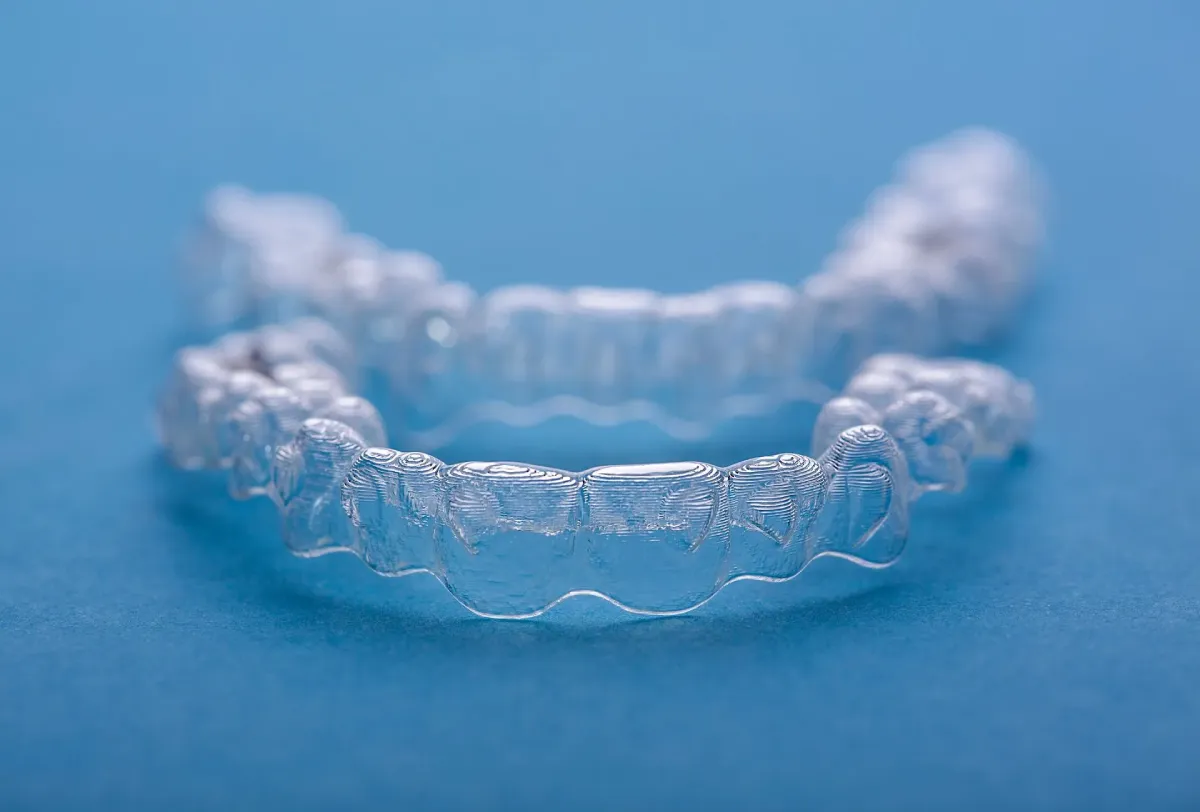
You start aligner treatment. You click in your first tray. It’s snug, but doesn’t hurt. The next morning rolls around. You fix yourself a piece of toast. Pop your trays out. Bite down. And think, huh, that’s uncomfortable.
And now you’re reading this blog because you're wondering is Invisalign pain normal? Does Invisalign hurt for the full length of treatment?
The answer is that a little bit of discomfort with clear aligners is normal, and you’ll typically experience it when a tray is new. That pressure and soreness then usually settles within a few days.
One quick note before we get into the how and why of Invisalign soreness: at Cardall Orthodontics we don’t rely on Invisalign. Dr. Cardall designs and produces our clear aligners in our own in-house lab. Which means your treatment stays consistent and in the hands of the doctor you know and trust from start to finish. That being said, throughout this article we will use the term “Invisalign,” because it’s what most people know by name and search for.
Now with that, we’re glad you’re here, and let’s get into it!

Why Does Invisalign Hurt?
Simply put, the reason why Invisalign hurts at times is because aligner trays apply pressure to your teeth and this triggers your body’s natural inflammation response.
In a 2024 review published in Frontiers in Pain Research, they provide a clinical breakdown of what’s happening. The review explains that orthodontic force is applied to your teeth, and that force compresses the periodontal ligament around each tooth. The inflammation that comes from this compression can make the nerve endings around your teeth more sensitive. All of this translates to your teeth feeling sore and tender for a few days.
So is Invisalign painful? A 2020 study published in the Journal of Oral Rehabilitation followed 27 adults through the first few weeks of their Invisalign journey, and the reported tooth pain was mild.
It can be helpful to keep in mind that while this soreness can be uncomfortable and frustrating, it’s part of the process that moves your teeth and gets you the results you want!
How Long Does Invisalign Hurt?
Any Invisalign pain you’re experiencing typically happens when you get a new set of trays and will subside after a few days, as your teeth get used to them and inflammation settles. The research also points to the most discomfort usually coming with your first set of trays.
A 2014 study in Progress in Orthodontics tracked the pain of 38 patients for a week after each of their first three trays. They discovered that with the first tray, Invisalign soreness peaked at about 24 hours and then lasted about four days. Then in the next two rounds, it was found that the soreness peaked sooner, closer to the 12-hour mark, and then lasted about three days. Each round it was noted that the level of pain also decreased.
So, if you’re wondering what the most painful Invisalign tray is, it’s likely going to be the first one. And if you are here because you Googled something like “when does Invisalign stop hurting,” the concise answer is: a few days into each tray, with each round of treatment feeling a little better than the last.
Does Invisalign Hurt More Than Braces?
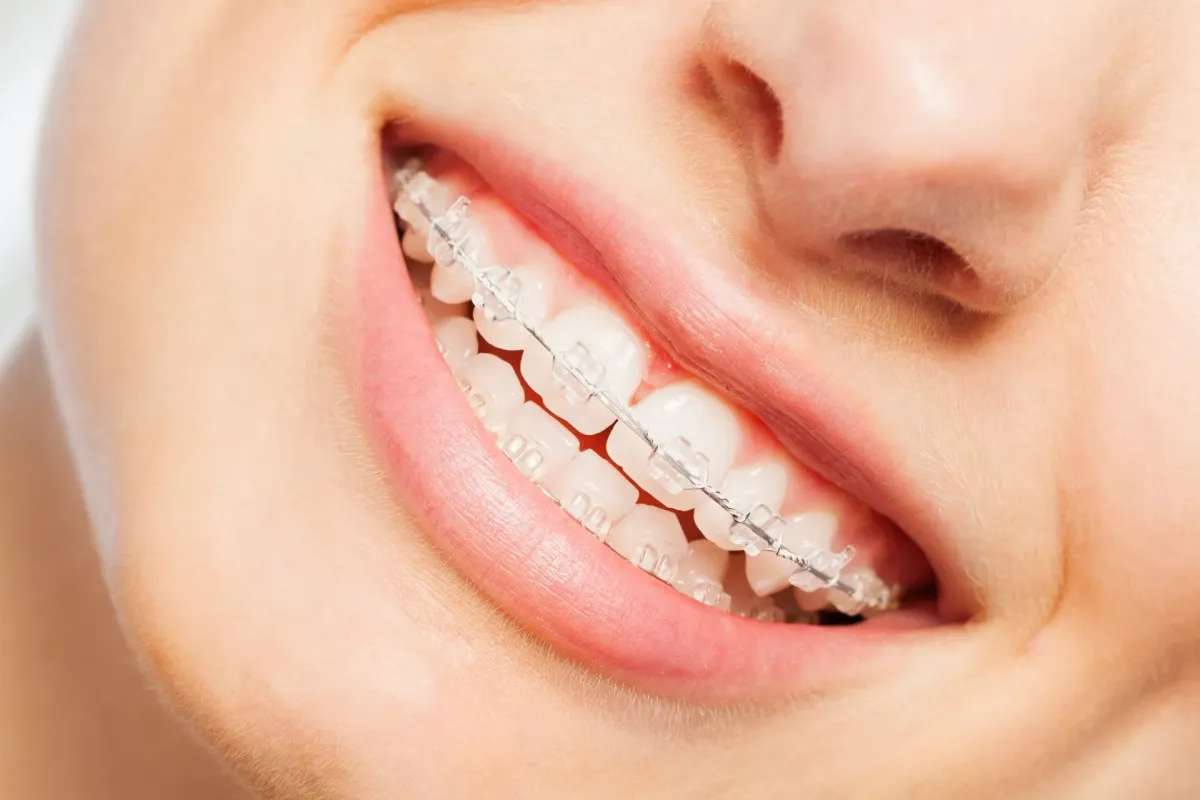
If you’re deciding between braces and Invisalign, you’ve probably had the question: does Invisalign hurt more than braces? And the honest answer is no. Obviously each individual and case is different, but if anything, the research leans toward braces hurting more than clear aligners, especially early on.
A meta-analysis published in BDJ Open in 2026 found that patients getting treated with clear aligners had less pain than braces patients. However, it’s important to note that the difference in pain between the two treatments was fairly small, with the authors describing aligner discomfort as likely being “very mild” and braces discomfort as “mild.” So, for both treatment options, it’s less of a matter of pain and more of a matter of discomfort and soreness.
How to Relieve Invisalign Pain
Invisalign pain relief is pretty straightforward since pain and discomfort are often minimal with clear aligner treatment. Relief typically includes an over-the-counter pain reliever, soft food, and something cold.
If you’re experiencing discomfort and searching for how to relieve tooth pain from Invisalign, this is the section for you:
Take an over-the-counter pain reliever
A Cochrane Review of 32 trials discovered that pain relievers really do help alleviate orthodontic pain, beating out a placebo or no treatment at all. They found no clear difference between ibuprofen and acetaminophen, so ask your orthodontist which one they recommend.
Eat soft foods for a few days
From soup to scrambled eggs to smoothies, eating soft foods can help when chewing is uncomfortable.
Try something cold
Putting something cold on your jaw, like an ice pack, can help numb the soreness and calm the inflammation. This could also be a good time for a cold sweet treat like ice cream (just take your trays out first!). Dr. Cardall’s personal favorite for orthodontic tooth pain is Dippin’ Dots, which is why we keep them stocked in the office for our patients to take home.
One thing NOT to do: It may be tempting to leave a tray out when your mouth is sore, but an aligner only moves your teeth when you’re wearing it. If you take it out while it’s doing its job, you can impact the timeline, as well as the effectiveness of treatment.
When Is Invisalign Pain a Problem?
The point when Invisalign pain is a problem is when it’s sharp, or when it hasn’t eased after a few days.
But is it normal for Invisalign to hurt? While mild soreness with a new tray is normal, you should contact your orthodontist if you are experiencing any of the following:
- Sharp pain that’s not just pressure or soreness
- Pain that persists and hasn’t eased after a few days
- Bleeding or swollen gums
- A tray that feels loose or doesn’t seem to fit on your teeth properly
That last one is important, because a deformed tray can be a significant source of pain. In a 2014 study published in Progress in Orthodontics, 10 of 90 Invisalign patients reported having significant pain or discomfort, and the researchers found that the most common cause of this pain was a deformed tray.
If you’re experiencing significant Invisalign pain, it’s always worth giving your orthodontist a call, so they can take a look at what’s going on and make sure there aren’t any issues that need to be addressed.
How Do We Handle Aligner Pain at Cardall Orthodontics?
If you’re experiencing pain with your aligners, give us a ring at (661) 515-1234. We’ll talk through what’s going on and find a time to have you come in if necessary.
Dr. Cardall designs and makes all of our clear aligners in our in-house lab, which means a deformed aligner can be handled right here in our office. Dr. Cardall is able to take a look, and then trim an edge that’s rubbing, or make a new tray if it’s not fitting properly. No need to rely on delivery timelines from an outside lab.
After reading this article you should have a much better grasp on the answer to the question of does Invisalign hurt, including what type of Invisalign pain is normal vs when to contact your orthodontist, as well as how to manage any discomfort or soreness that comes with treatment.
If you’re in Bakersfield, CA, and have questions about Invisalign pain or are looking to start clear aligner treatment, reach out to us at Cardall Orthodontics. With 900+ five-star reviews and having been voted best orthodontist in Bakersfield every year since 2020, we’re well positioned to give you the care you deserve. Schedule a free consultation today!
Sources
- Wang S, Ko CC, Chung MK. Nociceptor mechanisms underlying pain and bone remodeling via orthodontic forces: toward no pain, big gain. Frontiers in Pain Research. 2024;5:1365194. https://doi.org/10.3389/fpain.2024.1365194
- Tran J, Lou T, Nebiolo B, Castroflorio T, Tassi A, Cioffi I. Impact of clear aligner therapy on tooth pain and masticatory muscle soreness. Journal of Oral Rehabilitation. 2020;47(12):1521-1529. https://doi.org/10.1111/joor.13088
- Kaur K, Quadri SA, Saini RS, et al. Comparative impact of clear aligners versus fixed orthodontic appliances on periodontal health, pain, and quality of life: a systematic review and meta-analysis. BDJ Open. 2026;12:60. https://doi.org/10.1038/s41405-026-00450-z
- Monk AB, Harrison JE, Worthington HV, Teague A. Pharmacological interventions for pain relief during orthodontic treatment. Cochrane Database of Systematic Reviews. 2017;(11):CD003976. https://doi.org/10.1002/14651858.CD003976.pub2
- Fujiyama K, Honjo T, Suzuki M, Matsuoka S, Deguchi T. Analysis of pain level in cases treated with Invisalign aligner: comparison with fixed edgewise appliance therapy. Progress in Orthodontics. 2014;15:64. https://doi.org/10.1186/s40510-014-0064-7